
Relationship Between the Distribution of Gray Whales (Eschrichtius robustus) and Two Types of Prey in the Northern Bering and Chukchi Seas
DOI:
https://doi.org/10.14430/arctic83529Keywords:
gray whales; euphausiids; distribution; amphipodsAbstract
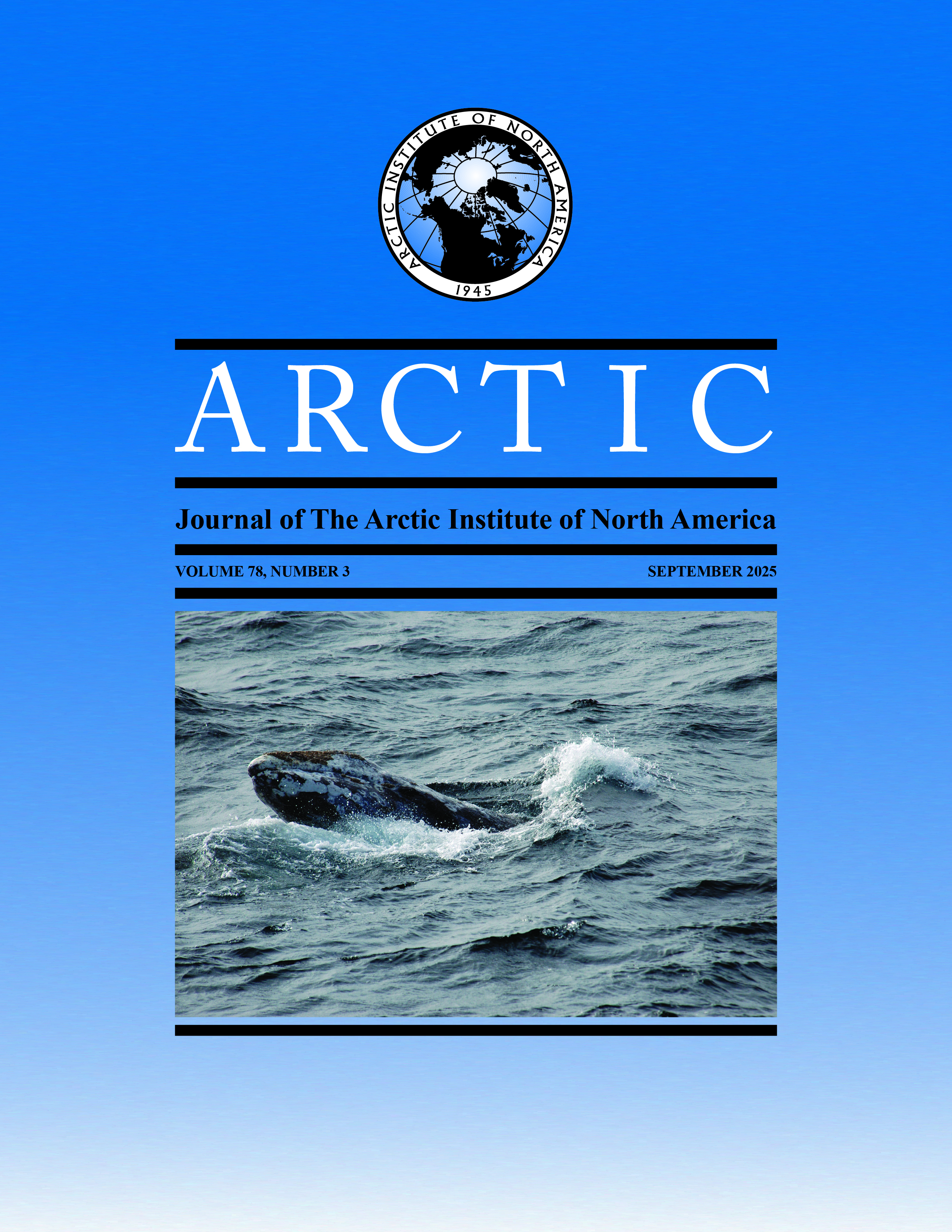
We examined the distributional relationship between gray whales and their prey, benthic amphipods and euphausiids, using data collected from shipboard surveys in the Pacific Arctic. We conducted four survey cruises (in 2007, 2008, 2012, and 2013) in the northern Bering Sea, Chukchi Sea, and adjacent waters, and collected data on cetacean sightings, including gray whales, benthic amphipods by benthic grabs, and euphausiids using plankton nets. We observed a total of 160 gray whales from 55 groups during the four surveys. Statistical analysis across the study area using a generalized linear model indicated that gray whale distribution was related to benthic amphipods, whereas their relationship with euphausiids was unclear. The Distributed Biological Observatory 3 (DBO3) area off Point Hope, Alaska, had the highest density of gray whales (0.035 individuals/km2, hereafter referred to as ind./km2) in the fall of 2012 compared with the densities of the other surveys (0.00 – 0.006 ind./km2). Higher biomass of euphausiids and higher average wet weight of a single euphausiid were also observed in the fall of 2012, which may have contributed to the high density of gray whales. Aligning with previous direct confirmation by visual whale surveys and prey sampling in the fall of 2003, the present study confirmed that, in the fall of 2012, the DBO3 area was an area where gray whales could feed on both benthic amphipods and euphausiids.
Downloads
Published
Issue
Section
License
Copyright (c) 2026 ARCTIC

This work is licensed under a Creative Commons Attribution 4.0 International License.